
5 Things You Need to Know Before Booking a Reflexology Treatment
If you’re considering reflexology for the first time, you may be unsure what to expect or how to prepare. Reflexology is a gentle, non-invasive therapy designed to support relaxation and overall wellbeing, but understanding the basics beforehand can help you feel more comfortable and get the most from your session.
Here are five important things to know before you book your reflexology treatment.
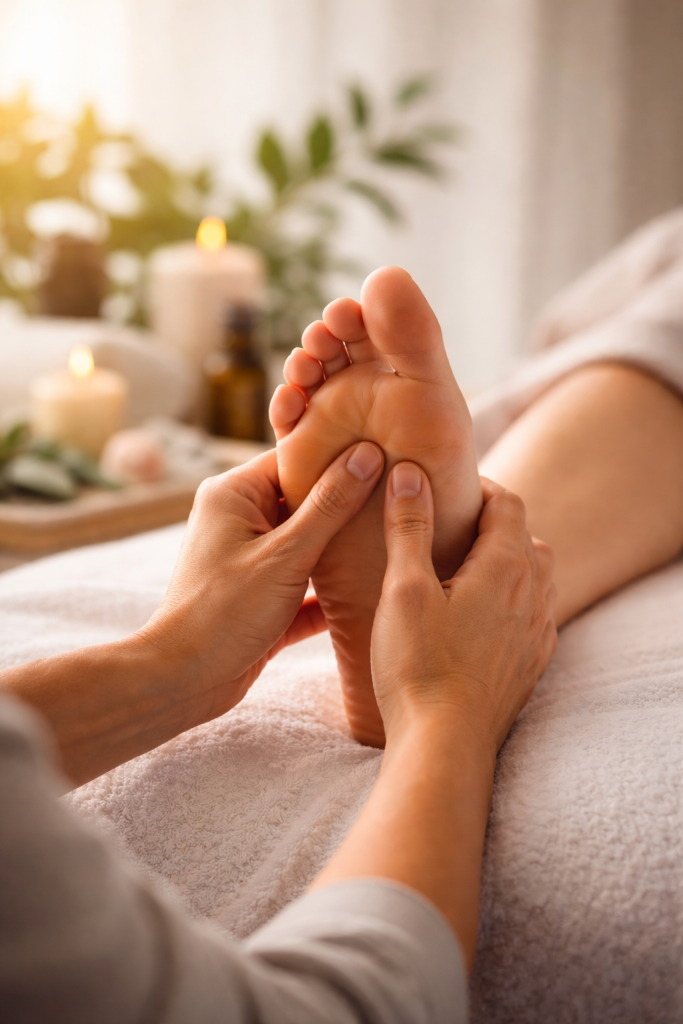
Foot Reflexology
1. You don’t need to prepare your feet before your reflexology appointment
One of the most common questions first-time clients ask is whether they need to do anything to prepare their feet.
The answer is no.
There is no special preparation required. You do not need to soak, scrub, or worry about how your feet look. In most cases, you will simply remove your shoes and socks before the treatment begins.
Reflexology is not a beauty treatment, so there is no pressure for “perfect” feet. A simple wash beforehand is fine, but even that is not essential. If you are not able to wash your feet before you come I will use a light cleanser to ensure they are lovely and clean before we begin.
So do not worry about your feet – we are reflexologists and we love all feet!
2. Wear comfortable clothing for full relaxation during reflexology
During a reflexology session, you will usually be lying or reclining comfortably while the feet are worked on.
Most of the time, only your shoes and socks are removed. However, depending on the treatment, the reflexologist may also work slightly up into the lower leg. For this reason, it’s best to avoid tight trousers or restrictive clothing around the lower legs. Loose, comfortable clothing helps you relax more deeply and allows the treatment to flow smoothly.
I can also be useful to have a spare woolly. Although most reflexologists will provide a blanket for you as your temperature drops during the treatment, it doesn’t hurt to be prepared.
Many people are surprised by how quickly they drift into a relaxed state once the treatment begins, so comfort plays a key role.
3. The benefits of reflexology often build over time
Some people feel immediate relaxation after just one session, while others notice more subtle changes that develop gradually.
Reflexology works by encouraging the body to enter a deeply relaxed state, which can become easier to access with regular treatments. Because of this, many clients choose to have a short course of sessions rather than a single appointment.
A typical starting point is around 4–6 treatments, as this allows the body time to respond and adjust.
Think of reflexology as a supportive process rather than a one-off treatment — the effects often deepen with consistency.
4. Allow time after your treatment to relax
Reflexology is deeply calming, and many people feel very relaxed afterwards — sometimes even slightly light-headed or “floaty”.
For this reason, it’s a good idea not to schedule anything demanding immediately after your appointment. Giving yourself some quiet time allows your body to fully absorb the effects of the treatment. Even simple things like going home, resting, or having a warm drink can help extend the benefits.
This post-treatment relaxation is often when clients notice the most noticeable sense of calm.
5. Reflexology supports wellbeing but is not a medical treatment
Reflexology is a complementary therapy that supports relaxation and general wellbeing. It is not intended to diagnose, treat, or replace medical care.
If you have any medical concerns or symptoms that are worrying you, it is important to seek advice from a qualified healthcare professional.
There are also certain situations where reflexology may not be suitable, such as deep vein thrombosis (DVT). A qualified reflexologist will always carry out a full consultation before treatment and discuss any health conditions to ensure the therapy is safe and appropriate for you.
Safety and informed consent are always a priority.
Final thoughts
Reflexology is a gentle, calming therapy focused on supporting relaxation and overall wellbeing. It is not about diagnosing or treating illness, but about giving the body time and space to unwind.
Free Videos on YouTube
If you like videos and would like to see more reflexology based videos, check out my YouTube channel:
 https://www.youtube.com/@TheReflexologyMentor
Training with The Reflexology Mentor
If you would like train with The Reflexology Mentor check out my list of courses on my website and my learning platform:
Website: https://www.calminginfluences.com/
Learning Platform: https://calminginfluences.learnworlds.com/
Continuing the conversation
Whether you watched the video, read the blog, or both, thank you for spending your time with me and do get in touch if you have any questions or if there are any types of videos you would find really helpful.
Dr Jackie