
A Simple Guide to What Reflexology is and how it is used
If you’ve heard the term reflexology but aren’t quite sure what it means, you’re not alone. It’s a popular holistic therapy, but many people still wonder what it actually involves and how it works.
Reflexology is a gentle, non-invasive complementary therapy that focuses mainly on the feet. It is designed to support relaxation, reduce stress, and promote overall wellbeing.
The Theory Behind Reflexology
Reflexology is based on the concept that different areas of the feet, and in some approaches the hands, face, or ears, are associated with different parts of the body. These mapped areas are referred to as “reflex points”. The underlying principle is that the body functions as an interconnected system, and that stimulating these points through gentle pressure may encourage a whole-body relaxation response.
Many people describe the experience as deeply calming, often reporting a sense of mental quietness or “switching off” during and after treatment. This relaxation response is considered central to how reflexology is thought to support overall wellbeing and help the body move toward a more balanced state.
It is not a medical treatment and does not diagnose or cure health conditions. Instead, it works alongside conventional healthcare to support the body and mind.
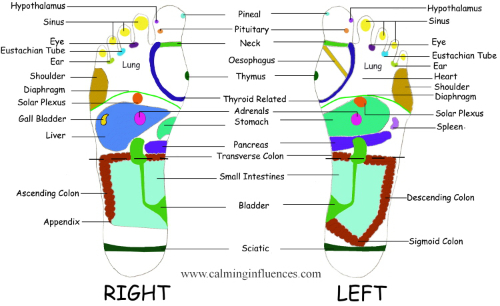
 Fancy a free Footmap? https://calminginfluences.learnworlds.com/course/reflexology-foot-map
How reflexology is viewed today
Modern reflexology is widely used as a complementary therapy and can also be found in wellness and spas. Reflexology is:
- Gentle and non-invasive
- Focused on relaxation
- Suitable for a wide range of people
- A natural way to support wellbeing
Common reasons include:
- Supporting relaxation and stress reduction
- Encouraging a sense of calm and balance
- Helping people unwind from busy lifestyles
- Supporting general wellbeing
People turn to reflexology for many different reasons and often it is used as part of a wider self-care route.
However, there is a growing body of research suggesting that reflexology may provide benefits for specific groups of people when used alongside conventional healthcare. Research has explored its potential role in supporting pain management, improving sleep quality, reducing stress and anxiety, enhancing wellbeing and quality of life, easing symptoms associated with cancer and its treatment, supporting people receiving palliative care, and providing support during pregnancy and labour, including evidence suggesting it may help reduce the duration of labour.
More recently, reflexology has also gained interest as a supportive therapy for people experiencing menopausal symptoms and those undergoing fertility treatment. Although the evidence in these areas is currently more limited, emerging research and clinical experience have led to increasing use of reflexology as part of a holistic approach to care.
As with all complementary therapies, individual responses vary, and reflexology should be viewed as a supportive therapy rather than a replacement for conventional medical treatment.
Important things to understand
Reflexology is a complementary therapy, which means it is designed to work alongside, not replace, medical care.
It does not diagnose medical conditions or provide medical treatment. If you have any health concerns, you should always seek advice from a qualified healthcare professional.
A trained reflexologist will also carry out a consultation before any treatment to ensure it is appropriate and safe for you.
https://youtube.com/shorts/4FMP-u9O6pI?feature=shareink
Final thoughts
Reflexology is a gentle, calming therapy focused on supporting relaxation and overall wellbeing. It is not about diagnosing or treating illness, but about giving the body time and space to unwind.
Free Reflexology Videos
If you like videos and would like to see more reflexology based videos, check out my YouTube channel:
https://www.youtube.com/@TheReflexologyMentor
Training with The Reflexology Mentor
If you would like train with The Reflexology Mentor check out my list of courses on my website and my learning platform:
Website: https://www.calminginfluences.com/
Learning Platform: https://calminginfluences.learnworlds.com/
Continuing the conversation
Whether you watched the video, read the blog, or both, thank you for spending your time with me and do get in touch if you have any questions or if there are any types of videos you would find really helpful.
Dr Jackie